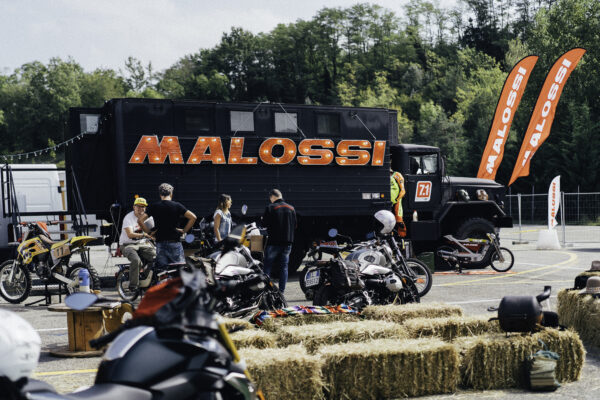
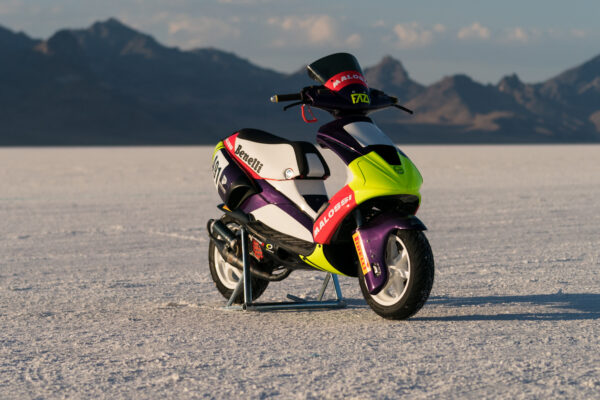
One imagines the head of a big industry intent on giving orders while sitting in an armchair made of human skin with his back turned, a cigar in his hand, and a cat on his lap. One imagines an abstract entity, because his name is a trademark engraved in the mind of generations of tomboys, but who know if he really exists. Then you happen to meet him in the workshop, and you understand that he exists, and he is light years away from any cliché. You find him with greasy hands intent on removing a bearing, a small, insignificant thing. And yet he has built his kingdom a bit a time: it all started when he was a fifteen-year old kid hanging out his fathers’s bicycle repair shop.

And yet, it is through insignificant little things like these, that Ugo Malossi has built is kingdom, one piece at a time; it all started when he was fifteen years old and was hanging out in his father’s bibycle repair workshop.
For him, the future has always been a state of mind, made of insatiable hunger and healthy madness; even now that he is almost ninety years old (in 2019), he still spends his days in the company taking care of purchases, and he never stops thinking about how the business will grow, how to get his hands on some pieces. He never stops working.

How do you think the scooter market will evolve – I ask – keeping in mind the data that describe a market that, despite everything, still holds its own. “There is much confusion”, he says, “On one hand, it is too early to imagine an electrical system capable of replacing the thermal one, even if the political choices have a considerable weight”. Those policies that today are invoked by all sides and yet struggle to embrace clear ideas, as they are doomed to remain ideological. It is possible that urban centres will ban the internal combustion engines, but on the other hand “in my days, mopeds were something for people in the suburbs”.
Like a modern-day Promtheus, Ugo Malossi is not afraid of what the future holds for his creature, having been used to creating the future, without eaiting to have to put up with it. Innovation without permission, someone would say.

The world in wich we live, regardless of the name we assign to it – Creation, nature, environment, world – is too beautiful and vast not to contain opportunities for all. “I always say that this is heaven on earth”, he continues, “and man finds his centre in this world with his hands, giving form to his thoughts and his ambitions, with work”.
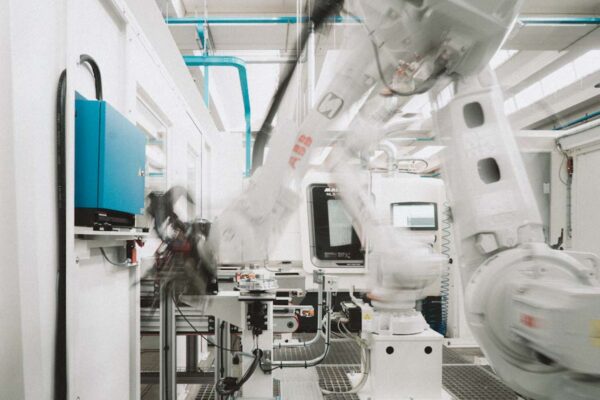
Work is at the centre of eveything. Work as a mantra, as a categorical imperative. Yes, because what work teaches us is that there is still a space to realise one’s dreams without wasting the skills that are too often atrophied by automation.
And the progress is all well and good, but you need to be prepared. The advice for the readers of “Miscela” sounds like a lay prayer: “I hope fathers and children will find a passion to develop together, because there is nothing better than doing a job that satisfies us and makes us feel useful”. Do something, anything, the Meaning of what you do will follow