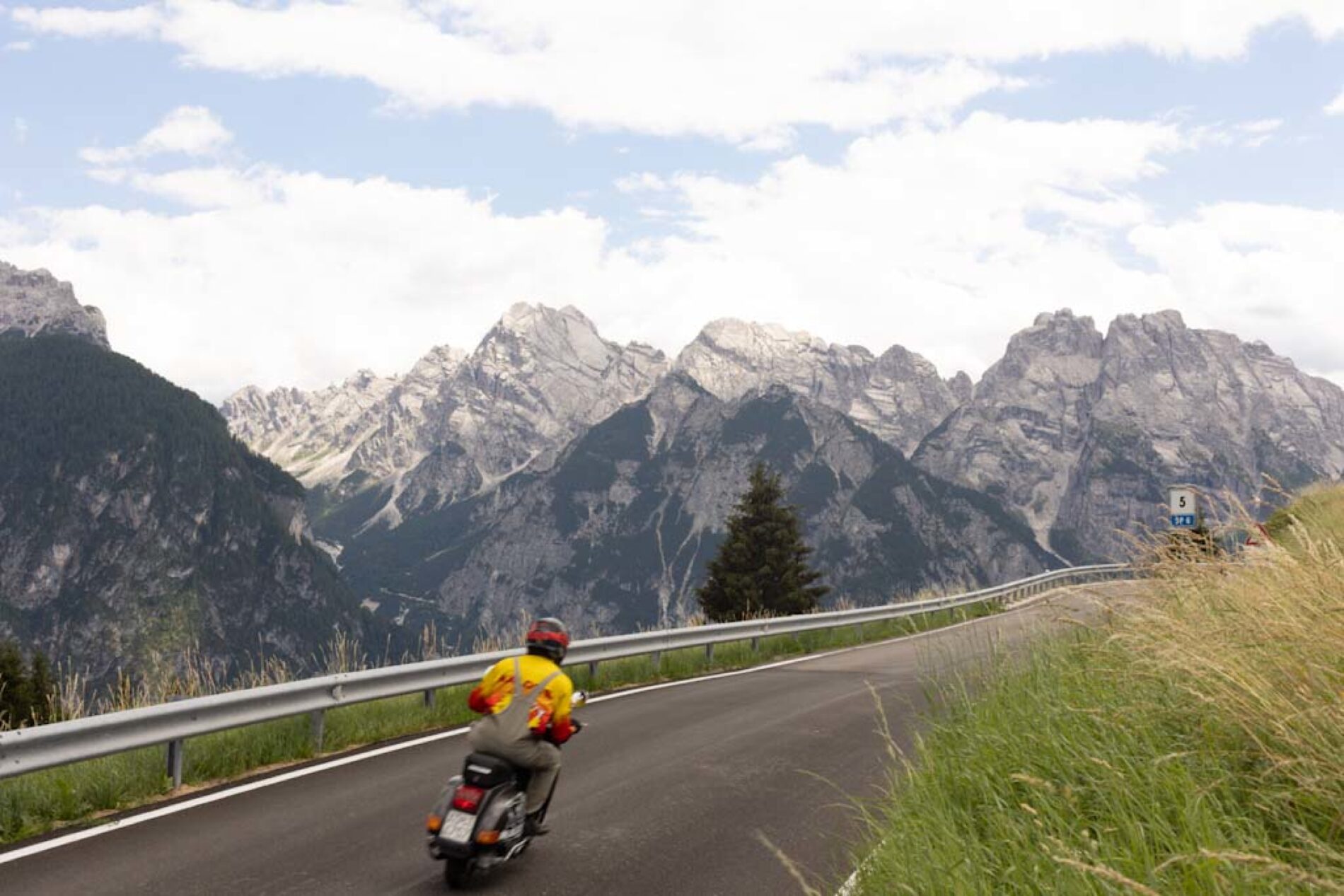
There are low-headlight ‘faro basso’ (low-headlight) Vespas worth as much as a small flat that spend their lives trapped under a glass display, inside a living room, or tucked away in a museum – their saddles untouched and their vintage number plates hung like artwork. Then there are the Vespisti Dolomitici (Dolomite Vespa enthusiasts), who take to the road on their Vespas to rack up 500 km of Alpine passes in a single day.
From 3rd to 5th July 2026, the streets of Sappada filled with 280 registered riders, including 72 travelling from France, Germany, Austria, Switzerland, Belgium, the Netherlands, and Luxembourg. Three days, two regularity trials – the ‘100 km Sappada’ and the ‘500 km Dolomites, Domenico Cendron Memorial’ race – as well as a route winding through the mountains of Friuli-Venezia Giulia, Veneto, and Alto Adige. We were right there in the thick of it with Henry Favre and our fully Malossi-tuned PX 200.
500 km at a steady pace
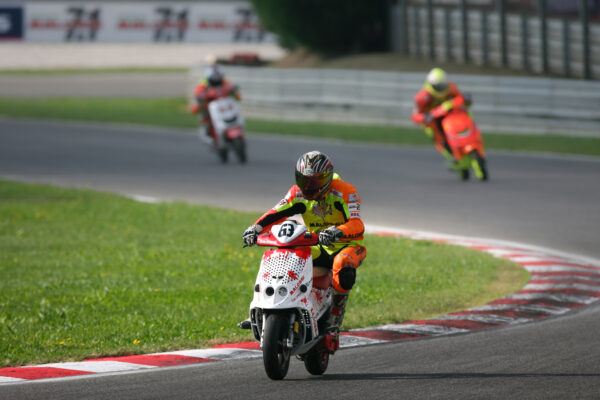
This isn’t a race for pure speed or peak power. In their own words, a ‘low-competitiveness, fixed-average regularity trial’ features strict timed checkpoints at set distances – and arriving early costs you just as many penalty points as turning up late. You don’t win by being the fastest. You win by being the most precise. On a classic Vespa, navigating mountain switchbacks for fifteen or sixteen straight hours from dawn until dusk, that’s a far tougher challenge than it sounds. Think about it: the throttle is right there, the temptation is constant, and holding back from pinning it takes serious willpower. As far as we’re concerned, anyone who finishes those 500 km isn’t just completing a ride – they’re winning a long argument with themselves, and they deserve absolute respect.
Built for speed or museum pieces?
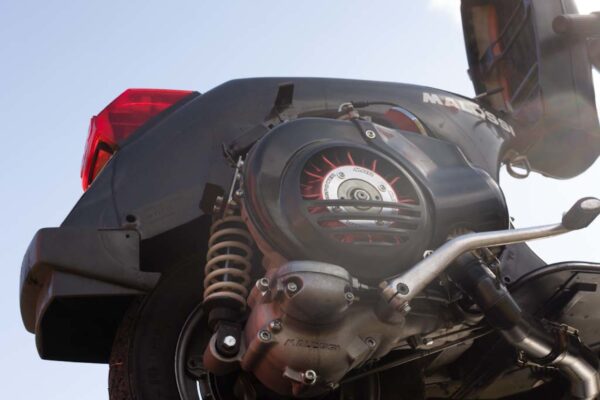
On the starting grid, you come across Vespas worth thousands of pounds. On the outside, they look immaculate – boasting original 1950s chrome and paintwork so pristine it looks like it rolled off the assembly line yesterday. But open them up, and beneath the saddle you’ll find completely reengineered engines: full-blown hot rods disguised as museum pieces.
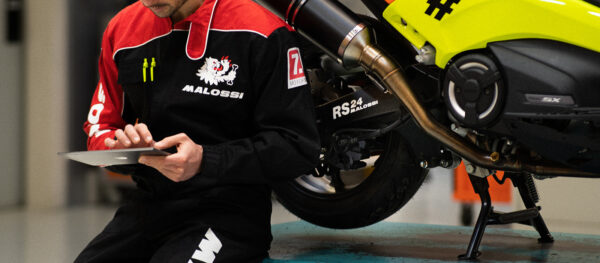
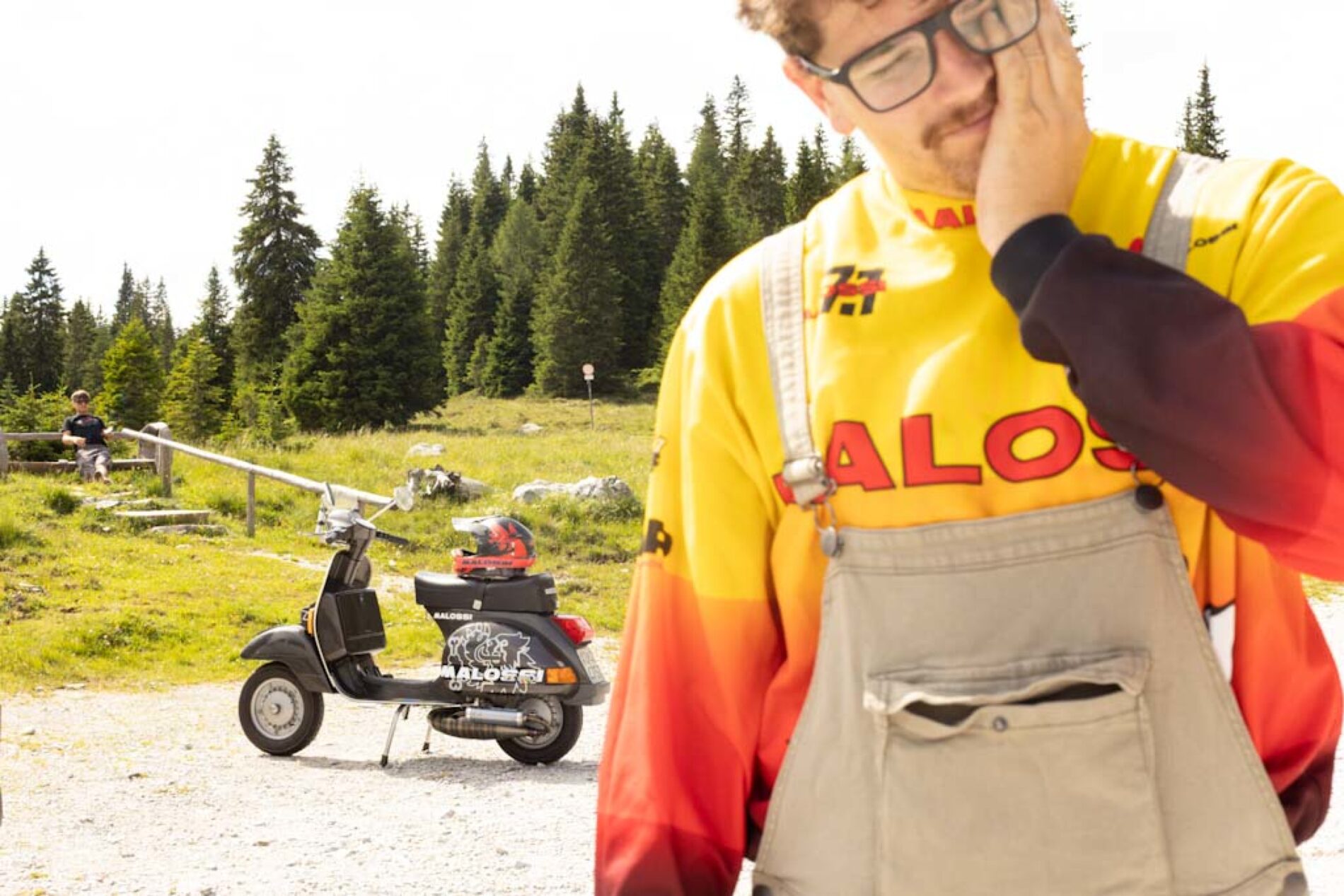
Ah, we get you, dear Vespa enthusiasts. Tuning a classic machine is a choice to keep it alive and kicking, improving both engine performance and reliability rather than letting it turn into a dust-collecting ornament in the garage. Modifying a Vespa means putting skin in the game: taking the risk of breaking down miles from anywhere, coming home with dirty hands, muttering a few choice words at cruel fate, and earning a proper story to tell. Take the Vespa PX 200 we handed to our special correspondent in Sappada, Henry Favre: on the outside, it looks like any other scooter (bar the lion stickers), but inside it’s 100% Malossi-spec. We stripped out the stock engine and replaced every single component with:
- a reed-valve crankcase: available in both rotary valve and reed-valve configurations, delivering a relentless fuel supply straight to the cylinder kit
- aluminium cylinder kit
- high-performance crankshaft
- close-ratio gearbox: ensuring seamless, snatch-free gear changes
- electronic ignition: plugs directly into the original electrical setup
- Power Classic exhaust
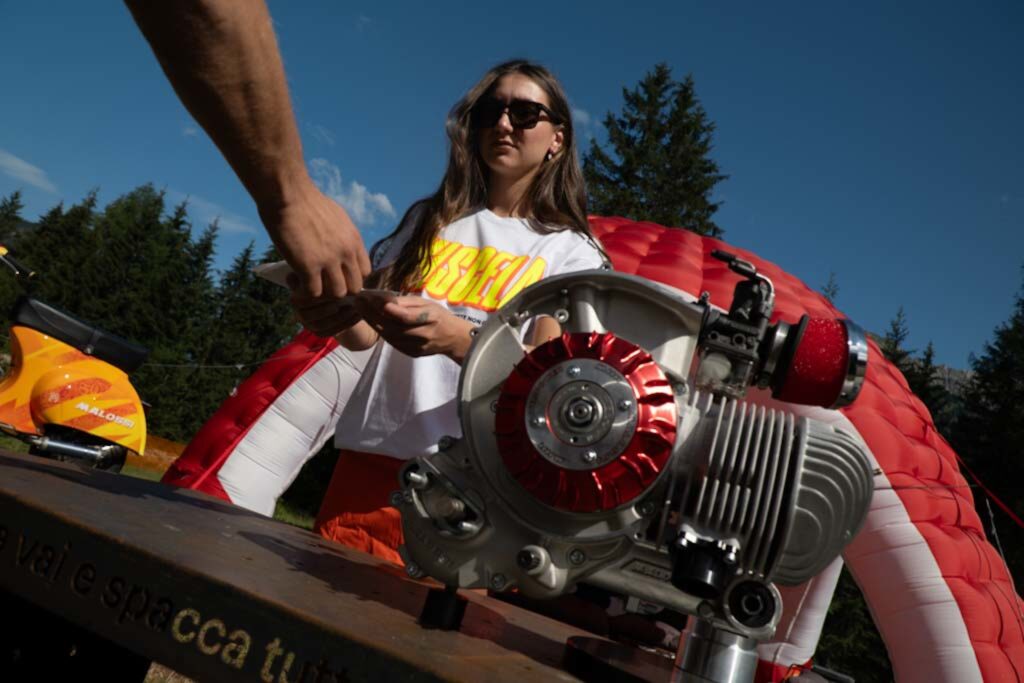
We even fitted a prototype component that isn’t in the catalogue just yet – installed without Henry’s knowledge to see how it would handle steep climbs and tight hairpins. But we’ll save that story for another time.
The Vespisti Dolomitici (Dolomite Vespa enthusiasts)
The organising club, Vespisti Dolomitici ASD, is headed by President Ivan Zanatta with the endorsement of the Municipality of Sappada and the Veneto Region. Zanatta has been driving this event for years: back in 2016, when the 500 km of the Dolomites was still run by Vespa Club Treviso, he was already the heart and soul of the operation. Over time, the club has evolved, but that underlying stubbornness hasn’t changed one bit.
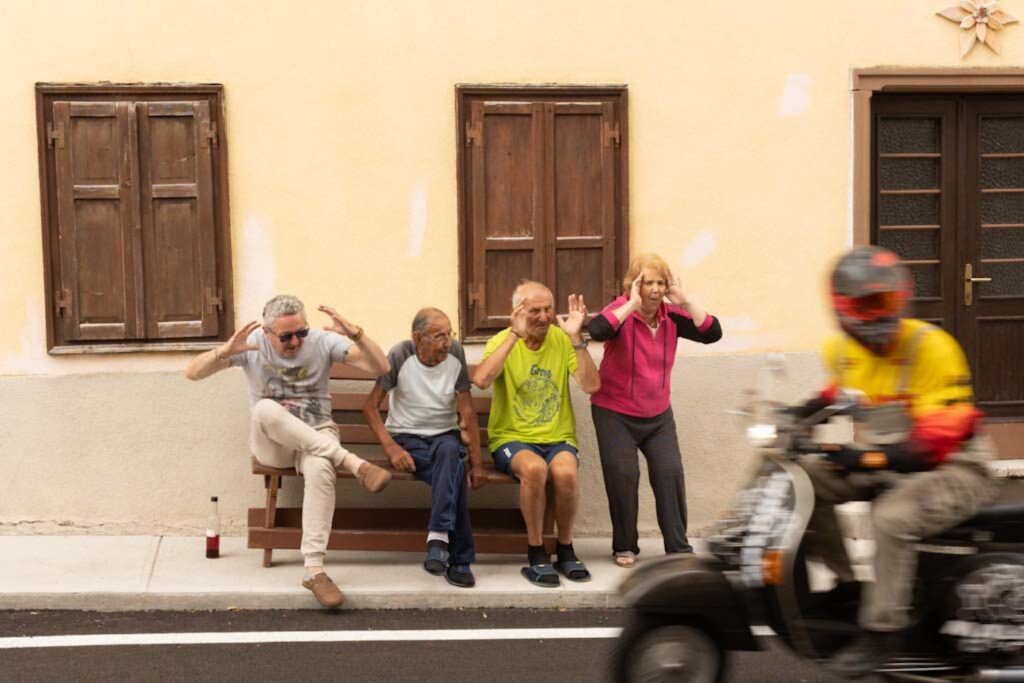
At the 500 km of the Dolomites, we met countless grey-bearded riders driven by decades of passion – the kind of grit that gets you out of bed at five in the morning for something that doesn’t pay a penny and won’t end up on television. That spirit is alive, kicking, and in ruddy good health.
To show our support, we put up competition prizes – cylinder kits, exhausts, gear, and accessories – because a passion like this deserves to be fuelled.
Those faces, those smiles, the villages of Sappada coming alive during the parade, and the gentleman talking about his Vespa as if it were an old friend: those memories will stay etched in our minds like a timeless photo album.